
23-26 June
Vilamoura,
Algarve, Portugal
in conjunction with the 31stIEEE Symposium on Computers and
Communications (ISCC)

an IEEE
Conference
to promote the exchange of information and
discussion about new ICT solutions for e-Health

Emerging
technologies
for Health
Cloud computing, Internet of Things (IoT), Computational
Intelligence, Bioinformatics,
Signal and Image processing
Welcome to the 6th IEEE International Conference on ICT Solutions for eHealth
in conjunction with the 31stIEEE Symposium on Computers and Communications (ISCC)
We are excited to announce that the conference organizers are hosting several Special Issues in high-quality, peer-reviewed journals.
We cordially invite authors of accepted papers to submit an expanded and enhanced version of their conference paper for publication.
This is a fantastic opportunity to maximize the reach and impact of your research.
For more detailed information about the journals, please visit the
The final program of the conference is now available:
Download ICTS4eHealth 2026 Final Program Schedule
e-Health is one of the major research topics that have been attracting cross-disciplinary research groups. The deployment of new emerging ICT technologies for Health, especially based on Cloud computing, Internet of Things (IoT), and Computational Intelligence, is attracting the interest of many researchers.
Following five successful workshop editions, five years ago ICTS4eHealth became an International IEEE Conference, and we are now proud to announce the sixth edition of this popular conference dedicated to ICT solutions for e-Health, especially based on Cloud computing, Internet of Things (IoT), and Computational Intelligence.
The conference will bring together researchers from academia, industry, government, and medical centers in order to present the state of the art in the emerging area of the use of cloud systems in connected health infrastructure and applications, and the use of IoT and Computational Intelligence techniques in the area of eHealth.



Steering Committee



Mission
e-Health is one of the major research topics that have been attracting cross-disciplinary research groups. The deployment of new emerging ICT technologies for Health, especially based on Cloud computing, Internet of Things (IoT), and Computational Intelligence, is attracting the interest of many researchers.
The use of Cloud computing, IoT technologies, and methods typical of Soft Computing and Computational Intelligence have been very prominent recently and can be of great help in finding good solutions to many practical healthcare applications.
For instance, health monitoring, health data storage, health data collection, mobile health, pervasive health, healthcare monitoring, telemedicine, context-aware computing, ubiquitous computing, processing health data in the cloud, securing health data in the cloud and Assistive Technology (AT) are areas of interest that are being addressed using cloud computing and IoT techniques. On the other hand, several challenging issues have raised due to the adoption of such emerging technologies. These include the quality of health data, the ability to retrieve information and use it in health context, as for example in tasks related to machine learning, knowledge discovery, decision support, regression, forecasting, optimization, feature selection, and additionally privacy and security issues of health data while being processed in the cloud, availability of health data, models of context and tele-monitoring of contextual applications.
Following five successful workshop editions, five years ago ICTS4eHealth became an International IEEE Conference, and we are now proud to announce the sixth edition of this popular conference dedicated to ICT solutions for e-Health, especially based on Cloud computing, Internet of Things (IoT), and Computational Intelligence.
The conference will bring together researchers from academia, industry, government, and medical centers in order to present the state of the art in the emerging area of the use of cloud systems in connected health infrastructure and applications, and the use of IoT and Computational Intelligence technique in the area of eHealth.
General Chair

Daniele Raví
University of Messina, Italy
Technical Program Co-Chairs

Nadia Brancati
ICAR-CNR, Italy

Francesco La Rosa
University of Messina, Italy

Saber Sami
University of East Anglia, United Kingdom

Hugo Silva
Instituto de Telecomunicações, Portugal

Laura Verde
University of Campania "L.Vanvitelli, Italy
Publicity Co-Chairs

Salvatore Giugliano
ICAR-CNR, Italy

Gabriele Morabito
University of Messina, Italy
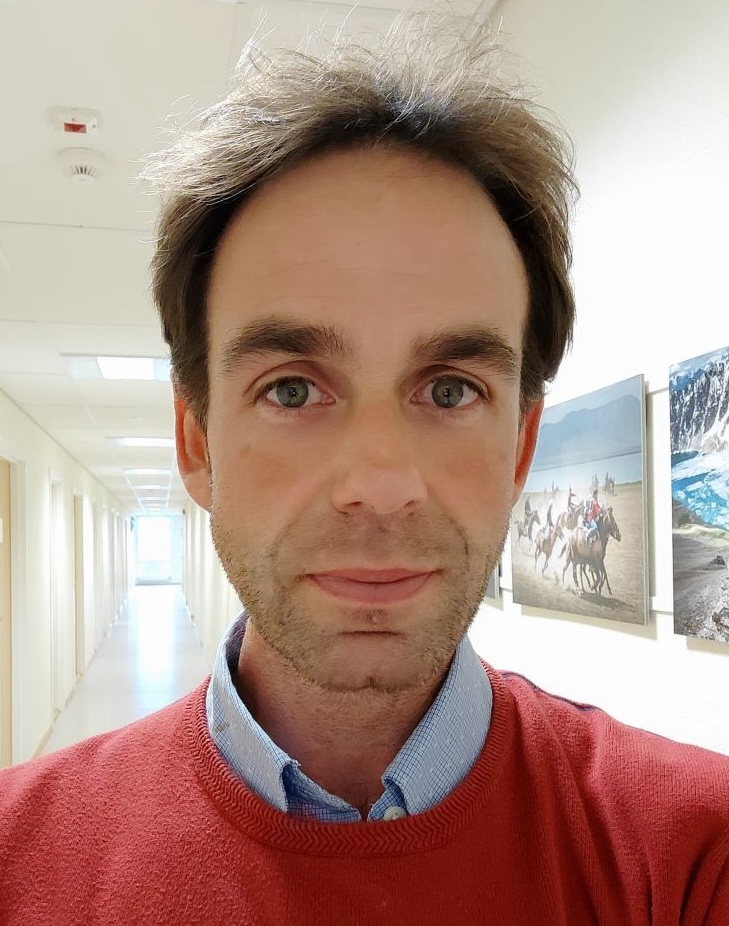
Keynote:
Prof. Francisco Martínez Álvarez
Talk: Quantum Machine Learning for eHealth: Foundations, Opportunities, and Emerging Applications
Quantum Machine Learning is an emerging field at the intersection of quantum computing and artificial intelligence, with the potential to transform data intensive domains such as eHealth.
This plenary talk will provide an accessible and broad introduction to the fundamental concepts of QML, including key quantum computing principles, hybrid quantum classical models, and current algorithmic approaches. The talk will then examine how these techniques may address inherent challenges to healthcare data, such as high dimensionality, complex feature interactions, and limited labeled datasets. Particular attention will be given to the current capabilities and limitations of near-term quantum devices, offering a realistic perspective on what can be achieved today.
Finally, the session will explore promising application scenarios in eHealth, including medical imaging, biomarker discovery, personalized medicine, and clinical decision support systems. The goal is to provide attendees with both a conceptual foundation and a critical understanding of where QML can meaningfully contribute to healthcare innovation in the coming years.
Bio:
Francisco Martínez Álvarez is a Full Professor in the Computer Science Division at Pablo de Olavide University. He received his Degree in Telecommunication Engineering in 2005, his M.S. Degree in Computer Science in 2007 and his Ph.D. in Computer Science in 2010, awarded with the extraordinary Ph.D. prize.
He has completed up to five long research stays at top universities: Université de Lyon 1 (2008), New York University (2010 and 2024), Universidad de Chile (2012) and Université de Lyon 2 (2017).
His primary research areas include time series, quantum machine learning, explainable artificial intelligence, and big data analytics, with over 200 papers published. He has supervised nine doctoral theses and led many research projects, including five Spanish and two European ones. Along with Prof. Alicia Troncoso, he founded the Data Science & Big Data Lab in 2015.
The commitment to the knowledge transfer to industry is undeniable. Over the last few years, he has been the principal investigator in numerous IoT, machine learning, data mining, and artificial intelligence projects, collaborating with more than 10 firms.
From 2013, he has been holding management positions at Pablo de Olavide University, such as Secretary of the School of Engineering, Head of the Division of Computer Science, General Director for Infrastructures, Campus and Sustainability, and Secretary of the Doctoral Programme in Biotechnology, Engineering and Chemical Technology.
According to Stanford University’s analysis, he has been ranked as one of the world’s top 2% single-year impact scientists in the years 2022, 2023, 2024, and 2025, and career-long scientist impact in the years 2024 and 2025.
Topics:
Conference Topics Include (But Are Not Limited To):
- Artificial Intelligence & Data Analytics for eHealth
- Artificial Intelligence for eHealth
- Generative AI for Longitudinal Data
- AI for Precision Medicine
- Knowledge Discovery and Decision Support
- Biomedical Data Processing
- Data/Visual Mining for Diagnostics
- Computer Aided Diagnostics
- Intelligent Bio-signal Interpretation
- Sensing, Wearables & Internet of Medical Things (IoMT)
- Internet of Things (IoT) applications for eHealth
- Biosensors and Sensor Networks
- Wearable Devices and Smart Sensors
- Monitoring of Vital Functions
- Sensor-based mHealth applications
- Signal, Image & Multimodal Processing
- Advanced Bio-signal Processing
- Signal Processing for Health
- Image Analysis for Health
- Medical Imaging Analysis
- Generative Models for Medical Imaging (GANs, Diffusion, Flow Matching)
- Image-to-Image Translation
- Computer Vision and Pattern Recognition
- Advanced Medical Visualization
- Digital Health Systems & Architectures
- Cloud Computing for eHealth
- Distributed and Edge Computing for Healthcare
- Telehealth, Telemonitoring and Telediagnostics
- e-Healthcare, m-Healthcare
- Extended and Digital Health Ecosystems
- AI-enabled Digital Twins for Healthcare
- Assistive Technologies & Human-Centered Design
- Assistive Technology and Assisted Living
- Personalized Assistive Technologies
- User-Centered Design and Usability
- e-Accessibility and Web Accessibility
- Assistive Technologies for Urban and Smart Environments
- Security, Privacy & Trustworthy eHealth
- Security and Privacy in eHealth
- Ethical, Legal and Social Implications (ELSI)
- Trustworthy AI for Healthcare
- Explainable/Interpretable AI for Health
- Federated/Privacy-Preserving Learning
- Modeling, Simulation & Clinical Applications
- Healthcare Modeling and Simulation
- Computational Biology and Bioinformatics
- Modeling and Simulation in BM
- Improved Therapeutic and Rehabilitation Methods
The use of Soft Computing/Computational Intelligence methods in facing problems in the above topics is highly welcome, although by no way compulsory.
Submission
ICTS4eHealth main conference:
Manuscripts should describe original work and should be no more than 7 pages in the IEEE double-column proceedings format, including tables, figures and references.
In order to download manuscript templates for IEEE conference proceedings use the following link:
Papers can be submitted directly to EDAS:
Note that accepted papers up to 6 pages will be published with no additional charge. Exceeding pages will be charged an additional fee. Papers exceeding 7 pages will not be accepted.
At least one author of each accepted paper is required to register to the conference and present the paper. Only registered and presented papers will be published in the conference proceedings.
Accepted papers will be included in the proceedings of
Camera Ready:
The authors of the accepted papers must follow the instructions available at
Call for Special Session Proposals
The Steering Committee of IEEE ICTS4eHealth 2026 invites and welcomes you to submit proposals for exciting Special Sessions which should mandatorily include paper submission on topics relevant to the conference areas.
The Special Session intends to address current and future research and application topics, through experts in the field and may include, other than the paper presentation, discussions, and interactions among participants.
If you intend to propose and organize a special session, please submit a proposal by sending an email to
Title of the Special Session A brief description of the area of concern (approx. 100 words), with special focus on why this is considered to be an interesting and significant topic. The name and contact information of two or more Special Sessions chairs, who are willing to promote and organize a sufficient amount of quality submissions to the Special Sessions. Please also indicate the short bio of the organizers.
Once approved, it is the duty of the organizers to publicize the Special Session among researchers and practitioners in the field and attract a sufficient number of papers. Papers submitted to Special Session will undergo the same review process as regular papers. The Special Session organizers are responsible for managing the review process, assuring at least three reviews per paper. This includes the creation of a Special Session Technical Program Committee.
Before starting the review process, Special Session organizers must explicitly declare papers which present a conflict of interest for them. Any conflict of interest will be managed by the ICTS4eHealth organizers.
A minimum of 8 submitted papers, with an acceptance rate of 50% maximum, is required for each session.
- Submission deadline for Special Session Proposals:
February 03, 2026 - February 08, 2026 (EXTENDED and FIRM) - Notification of acceptance:
February 12, 2026
Accepted Special Sessions:
SS-GAIN-Health: Generative AI for Next-generation e-Health
Generative Artificial Intelligence offers impressive opportunities in the next generation e-health systems, having the potential to accelerate clinical research, improve diagnostic accuracy through advanced multimodal analysis, support rare disease studies via high-quality synthetic data augmentation, and significantly reduce the administrative burden on clinicians by automating repetitive and time-consuming tasks. The GAIN-Health Special Session aims to provide a focused forum for researchers, practitioners, and industry stakeholders to present advances, share insights, and discuss the challenges and opportunities of applying generative AI to the e-Health ecosystems. The session welcomes innovative models and novel methodologies, real-world applications, and critical perspectives on the responsible use of GenAI in medicine.
TOPICS (but are not limited to):- Synthetic medical image generation and 3D data augmentation
- Biosignal generation and enhancement (ECG, EEG, EMG, PPG, etc.)
- Digital twins, virtual patients, and simulation frameworks
- Large Language Models and Clinical NLP
- Automated medical report generation
- Conversational agents and LLM-based clinical assistants
- Multimodal integration of text, imaging, bio signal etc
- Cross-modal generation (e.g., text-to-image for medical diagnostics)
- Multimodal reasoning for clinical decision support
- Use cases, Benchmarks, and Real-World Deployment
- Prof. Mario Vento, University of Salerno, Italy
- Prof. Alessia Saggese, University of Salerno, Italy
- Dr. Martino Giaquinto, University of Salerno, Italy
- Mr. Simone Bove, University of Salerno, Italy
- Mr. Antonio Vitale, University of Salerno, Italy
Submission Link: https://edas.info/N35011
SS-INSIGHT: INtelligent Systems for Imaging-based diaGnosis in HealThcare
Intelligent Systems are playing an increasingly important role in clinical practice, supporting physicians and healthcare professionals in disease diagnosis, therapy optimization, and health monitoring. Among these advancements, a promising research direction is imaging-based diagnosis, where intelligent systems enable accurate, robust, and timely interpretation of medical images. This Special Session, INSIGHT, aims to bring together recent advances in AI-driven image analysis for healthcare, focusing on methods and systems that support imaging-based clinical decision making across key application domains(e.g., radiology, digital and computational pathology, computational cytology, and neuroimaging). Contributions addressing both methodological advances and clinically oriented applications are encouraged.
TOPICS (but are not limited to):- Imaging-based clinical decision support system for patient-specific outcome prediction
- AI-driven medical image analysis across imaging modalities (e.g., CT, MRI, PET, ultrasound)
- AI-based systems in digital pathology and computational cytology
- Multimodal medical image analysis and data integration
- Learning-based medical image segmentation, classification, and anomaly detection
- Generative and diffusion-based models for medical imaging, including synthetic data generation
- Self-supervised and unsupervised learning for medical image analysis
- Explainable and interpretable AI for medical imaging and neural signal analysis, including post-hoc and ante-hoc approaches
- Human–AI collaboration for explainable and clinically usable systems
- Dr. Roberta De Fazio, University of Campania Luigi Vanvitelli, Italy
- Dr. Ciro Russo, University of Cassino and Lazio Meridionale, Italy
- Mrs. Grazia Gargano, University of Bari Aldo Moro, Italy
- Mr. Gaetano Settembre, University of Bari Aldo Moro, Italy
Submission Link: https://edas.info/N35012
SS-AIMAXR-TR: AI-Based Motion Analysis and Extended Reality for Telemedicine and Rehabilitation
Recent advances in computer vision, artificial intelligence, markerless motion capture, and extended reality (XR) systems are transforming remote healthcare, from rehabilitation to telepresence-enabled surgery and medical training. This session welcomes technical and clinical contributions exploring XR combined with AI-driven movement analysis for telemedicine, telerobotics, and adaptive rehabilitation. Topics include real-time pose estimation and depth sensing, multimodal sensor fusion, closed-loop serious games, automated motor scoring, outcome prediction, and XR-supported operating theatre scenarios for training and remote assistance. By bridging engineering innovation with clinical validation, the session highlights scalable, evidence-based workflows that enable personalized care, immersive telepresence, and next-generation medical education across real-world clinical environments.
TOPICS (but are not limited to):- AI-based motion analysis for rehabilitation and telemedicine
- Markerless motion capture and pose estimation in clinical environments
- Depth sensing and multimodal sensor fusion for movement monitoring
- XR (VR/AR/MR) systems for telerehabilitation and remote assessment
- Serious games and gamified XR with closed-loop feedback for motor recovery
- Automated motor scoring, functional outcome prediction, and clinical decision support
- Cloud–edge AI architectures and IoMT-based infrastructures for telehealth and rehabilitation
- Telerobotics and XR interfaces for telepresence, tele-mentoring, and remote intervention
- Clinical trials and real-world studies of AI/XR-based rehabilitation systems
- Usability, patient engagement, trust, privacy, and ethical aspects of AI/XR in telemedicine
- Mr. Giovanni Lonia, University of Messina, Italy
- Mrs. Mirjam Bonanno, University of Messina and IRCCS Centro Neurolesi Bonino-Pulejo, Italy
- Prof. Rocco Salvatore Calabrò, IRCCS Centro Neurolesi Bonino-Pulejo, Italy
- Prof. Salvatore Livatino, University of Hertfordshire, United Kingdom
Submission Link: https://edas.info/N35031
SS-ClinIRXAI: The Importance and Relevance of Explainable AI Approaches in Clinical Applications
In clinical applications, the presence of information technologies is becoming increasingly common, providing solutions that support physicians in their decision-making processes. Clinical decision support systems (CDSS) that incorporate artificial intelligence (AI) models are powerful tools for enhancing healthcare professionals' ability to deliver accurate, timely patient care. CDSSs are available for many tasks from diagnosis to prognosis: ROI detection, lesion classification, drug choice, treatment planning, and survival prediction.
Regardless of the job performed, it is mandatory to have a full understanding of the entire processing pipeline, from data acquisition to the CDSS outcome. What happens at each stage, which features are involved, and what role they play in the model/classifier's outcome are legitimate questions that need to be answered. Indeed, it is no longer sufficient to use computerized tools as black boxes, without providing information on how data is processed and quantified and, above all, on what types of data play a decisive role in the final decision.
These needs motivate Explainable Artificial Intelligence (XAI). There are many advantages to implementing explainable models, including explanatory debugging, user acceptance and control, reliability and insight, and ethical/legal considerations.
In this special session, contributions proposing models/classifiers for clinical applications that address model explainability and feature interpretability are welcome.
- Explainable models for decision-making support in healthcare
- Explainable machine learning algorithmsh
- Interpretable features
- By design, ante-hoc, and post-hoc explainabilityn
- Prof. Leonardo Rundo, University of Salerno, Italy
- Prof. Roman Byrtus, Institute of Mathematics, Brno University of Technology, Czech Republic
- Dr. Francesco Prinzi, University of Palermo, Italy
- Dr. Carmelo Militello, ICAR-CNR, Italy
Submission Link: https://edas.info/N35052
ICTS4eHealth Registration Fees:
Please carefully check the registration instructions at https://ieee-iscc.computer.org/2026/registration/
(all prices are displayed in euros)
| Type | Early Registration | Late Registration |
|---|---|---|
| IEEE Member Conference Registration | €440 | €530 |
| Non – IEEE Member Conference Registration | €530 | €640 |
| IEEE STUDENT Conference Registration (NOT FOR AUTHORS) | €235 | €280 |
| Non – IEEE STUDENT Conference Registration (NOT FOR AUTHORS) | €285 | €340 | Author registration type includes: up to two papers registration, access to all Conference sessions, Conference proceedings, Coffee Breaks and Lunches during ICTS4eHealth conference realization days, and ISCC Welcome Cocktail and Conference Dinner. Student Registration includes: access to all Conference sessions, Conference proceedings, Daily Coffee Breaks, Daily Lunches and the Welcome Cocktail. STUDENT Registration requires documentation that proves a registered Student status, such as: student’s ID or a letter from the Head of Department/Director of Doctoral School prepared on the notepaper of the institution. This documentation must be sent to epy@epy.gr indicating "ISCC 2026, STUDENT STATUS DOCUMENTATION" in the subject field. STUDENT Registration without association to a student documentation will not allow the corresponding attendee to access the conference. |
|
Any administrative/bureaucratic/financial/registration/visa issue is directly managed by the mother conference ISCC.
Therefore, authors can contact ISCC organizers to ask them any question about registration.
Technical Program Committee
- Muhammad Shahwaiz Afaqui - Teesside University, United Kingdom (Great Britain)
- Antonio Agliata - Università Degli Studi di Salerno, Italy
- Olasupo Opeyemi Ajayi - University of the Western Cape, South Africa
- Mohammed Ibrahim Alghamdi - Al-Baha University, Saudi Arabia
- Agnese Augello - National Research Council, Italy
- Bigomokero Antoine Bagula - University of the Western Cape, South Africa
- Daniel Balouek - Inria, France
- Luigi Barbato - Consiglio nazionale delle ricerche (CNR), Italy
- Daniel Macêdo Batista - University of Sao Paulo, Brazil
- Enkhzaya Batnasan - University of Eastern Finland, Finland
- Cinzia Bernardeschi - University of Pisa, Italy
- Vincenzo Bevilacqua - ICAR-CNR, Italy
- Susana Brás - Universidade de Aveiro, Portugal
- Celso Brennand - Federal Rural University of Pernambuco, Brazil
- Giuseppe Caggianese - National Research Council of Italy, Italy
- Daryn Calangi - University of Messina, Italy
- Francesco Calimeri - University of Calabria, Italy
- Claudia Canali - University of Modena and Reggio Emilia, Italy
- Lorenzo Carnevale - University of Messina, Italy
- Edson Damasceno Carvalho - Universidade Federal do Piauí, Brazil
- Gabriella Casalino - University of Bari Aldo Moro, Italy
- Po-Yin Chang - National Kaoshiung University of Science and Technology, Cijin Campus, Taiwan
- Sudarshan S Chawathe - University of Maine, Orono, USA
- Reda Chefira - ENSAMR - Ecole Nationale Supérieure d'Arts et Métiers, Rabat, Morocco
- Stefano Chessa - Universita' di Pisa, Italy
- Christos Chrysoulas - Heriot-Watt University, United Kingdom (Great Britain)
- Mario Ciampi - National Research Council of Italy, Italy
- Gianluca Ciattaglia - Università Politecnica Delle Marche, Italy
- Giulia Cisotto - University of Trieste, Italy
- Teresa Conte - National Research Council of Italy, Italy
- Jovelyn C. Cuizon - University of San Jose - Recoletos, Philippines
- Gabriele D'Angelo - University of Bologna, Italy
- Emanuele Damiano - Institute for High Performance Computing and Networking, ICAR-CNR, Italy
- Danilo Daniele - Polytechnic University of Bari, Italy
- Hafsa Shareef Dar - University of Gujrat, Pakistan
- Andrea De Salve - National Research Council (CNR), Italy
- Pierluigi Dell'Acqua - University of Messina, Italy
- Antonio Della Cioppa - University of Salerno, Italy
- Barbara Di Camillo - USA
- Antonio Di Marino - ICAR CNR, Italy
- Flavio Di Martino - IIT-CNR, Italy
- Massimiliano Donati - University of Pisa, Italy
- José dos Reis, Jr. - Federal University of Piaui, Brazil
- Lei Feng - Beijing University of Posts and Telecommunications, China
- Antonio Filograna - Engineering Ingegneria Informatica S.p.A., Italy
- Stefano Forti - University of Pisa, Italy
- Valerio Frascolla - Intel Deutschland GmbH, Germany
- Sebastian Fudickar - University of Luebeck, Section for Clinical Research IT (SKFIT), Germany
- Marco Garofalo - University of Messina, Italy
- Ugo Gentile - Gentile, Switzerland
- Salvatore Giugliano - Institute for High-Performance Computing and Networking (ICAR) National Research Council (CNR), Italy
- André Morais Gurgel - Federal University of Rio Grande Do Norte, Brazil
- Chieh-Hsiang Hsu - Southern Taiwan University of Science and Technology, Taiwan
- Faisal Hussain - National University of Modern Languages (NUML), Pakistan
- Shareeful Islam - Anglia Ruskin University, United Kingdom (Great Britain)
- Devki Nandan Jha - Newcastle University, United Kingdom (Great Britain)
- Alexander Kocian - University of Pisa, Italy
- Panayiotis Kotzanikolaou - University of Piraeus, Greece
- Tomas Koutny - University of West Bohemia, Czech Republic
- Massimo La Rosa - National Research Council of Italy, Italy
- Claudia Licari - University of Messina, Italy
- Yu-Sheng Lin - Southern Taiwan University of Science and Technology, Taiwan
- Fabio Lisi - University of Tokyo, Japan
- Ahmad Lotfi - Nottingham Trent University, United Kingdom (Great Britain)
- Haoxiang Luo - University of Electronic Science and Technology of China, China
- Douglas D J Macedo - Federal University of Santa Catarina, Brazil
- Ramon Malaquias - Federal University of Rio Grande do Norte, Brazil
- Pietro Manzoni - Universitat Politècnica de València, Spain
- Gabriele Morabito - University of Messina, Italy
- Maurice David Mulvenna - Ulster University, United Kingdom (Great Britain)
- Rosario Napoli - University of Messina, Italy
- Roberto Nardone - Via Giulio Natta 4 Napoli (NA) Italy, Italy
- Hiroyuki Nozaka - Hirosaki University, Japan
- Ilídio Oliveira - University of Aveiro, Portugal
- Guadalupe Ortiz - University of Cadiz, Spain
- Petra Paiè - Politecnico of Milan, Italy
- Giovanni Paragliola - National Research Council (CNR), Italy
- Dipti Patil - MKSSS's Cummins College of Engineering for Women, Pune, India
- Loreto Pescosolido - CNR - Italian National Research Council, Italy
- Zahra Pezeshki - Moscow Power Engineering Institute, Russia
- Tuan Pham - Queen Mary University of London, United Kingdom (Great Britain)
- Ivan Miguel Pires - Universidade de Aveiro, Portugal
- Niki Pissinou - Florida International University, USA
- Seyedamin Pouriyeh - Kennesaw State University, USA
- Riccardo Raciti - University of Catania, Italy
- Giulia Rafaiani - Università Politecnica Delle Marche, Italy
- Maria Teresa Reggio - University of Messina, Italy
- Miguel Hernández Rodríguez - University of La Laguna, Spain
- Tommaso Ruga - University of Calabria, Italy
- Alessandro Santopaolo - Sapienza University of Rome, Italy
- Bilal Sardar - Anglia Ruskin University, Cambridge, United Kingdom (Great Britain)
- Antonio Scardace - University of Catania, Italy
- Aaron Raymond See - National Chin-Yi University of Technology, Taiwan
- Ralf Seepold - HTWG Konstanz, Germany
- Patrick Sello - University of Western Cape, South Africa
- Linda Senigagliesi - ETIS UMR 8051, CYU, ENSEA, CNRS, France
- Sarah Shafqat - DreamSofTech, Pakistan
- Mario Sicuranza - Institute for High Performance Computing, ICAR-CNR, Italy
- Stefano Silvestri - National Research Council of Italy (CNR), Italy
- Victor Ströele - Federal University of Juiz de Fora, Brazil
- Emilio Sulis - University of Turin, Italy
- Francesco Tusa - University of Westminster, United Kingdom (Great Britain)
- Kalum Priyanatha Udagepola - Scientific Research Development Institute of Technology Australia, Australia
- Naeem Ullah - University of Naples Federico II, Italy
- Szymon Wilk - Poznan University of Technology, Poland
- Pooya Moradian Zadeh - University of Windsor, Canada
- Marco Zappatore - University of Salento, Italy
- Gianluca Zaza - University of Bari Aldo Moro, Italy
- Liang Zhao - Kennesaw State University, USA
- Ester Zumpano - University of Calabria, Italy

Best Paper Award
A "Best Paper Award" Certificate will be conferred on the author(s) of a paper presented at the conference, selected by the Chairs based on scientific significance, originality and outstanding technical quality of the paper, as assessed also by the evaluations of the members of the Program Committee.
Special Issues
Authors of accepted papers are invited to submit extended versions of their papers for publication as full journal papers in the:
- Special Issue on Digital Health: AI-Driven Personalized Healthcare and Applications organized in the indexed journal MDPI AI - Artificial Intelligence (Q1 - IF: 6.5).
- Special Issue on Advancements and Applications of the Internet of Things (IoT) in Medicine organized in the indexed journal Frontiers in Medicine (Q1 - IF: 3.6).
- Special Issue on Application of Deep Learning in Medical Image Classification and Segmentation for Precise Disease Diagnosis organized in the indexed journal MDPI Bioengineering (Q2 - IF: 4.4).
- Special Issue on Mathematical Methods for Artificial Intelligence and Visual Information Processing in Networked Systems organized in the indexed journal MDPI Mathematics (Q2 - IF: 2.3).
Important Dates
Venue

Hyatt Regency Vilamoura Algarve (also called Hotel Dom Pedro)
The conference will be hosted at Hyatt Regency Vilamoura Algarve (also called Hotel Dom Pedro).
In this section we show options to use this same venue as an accomodation option, and an alternative recommendation.
https://www.hyatt.com/hyatt-regency/en-US/faorq-hyatt-regency-vilamoura-algarve
Other Accommodation

Garvetur Apartments
Throughout Vilamoura there are muliple Apartments managed by Garvetur, that are offering us a special rate with 25% discount.
To apply this promotional code to a reservation, please do as follows:
- Head to Garvetur’s webpage, www.garveturholidays.com, and choose a property in Vilamoura.
- Select dates (June 23 to June 26).
- Select the box on the side of the page “Promo Codes and Special Rates” and enter the promotional code GVTIEEEISCC01.
- If everything went fine, a new and discounted price should appear on screen after applying the code, next to the apartment options.
- Note that the discount code can only be used in the conference dates (from June 23rd to June 26th).
